


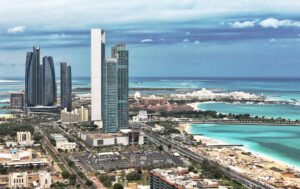
Abu Dhabi’s real estate market is entering 2026 on fundamentally different footing than it occupied even two years ago. What was once characterized as Dubai’s quieter neighbour has transformed into a market defined by record transaction volumes, sustained price growth, and deepening institutional confidence.
This isn’t speculative froth—it’s structural demand meeting disciplined supply in a market that’s finally receiving the global attention its fundamentals have warranted for years.
The Numbers Tell a Clear Story
Total property transactions in 2025 reached AED 94 billion, representing more than 40% year-on-year growth. This isn’t just increased activity—it’s a fundamental shift in how investors, developers, and end-users view Abu Dhabi’s long-term trajectory.
Strong demand across residential, commercial, and mixed-use sectors continues to outpace supply in key districts, driven by strategic economic diversification, regulatory clarity, and the emirate’s rising position as a destination for global capital.
For investors tracking market cycles, the pattern is unmistakable: Abu Dhabi has moved from cyclical demand to sustained structural growth.
What’s Driving the Market in 2026 Economic Diversification Beyond Oil
Abu Dhabi’s deliberate move to diversify beyond oil dependence has created tangible impact on real estate activity. The emirate’s focus on financial services, technology, tourism, and infrastructure has strengthened the broader economic base, creating new employment corridors and residential demand clusters that didn’t exist five years ago.
This isn’t theoretical—it’s visible in office absorption rates, residential occupancy levels, and the profile of companies establishing regional headquarters in the capital.
The Fintech and AI Revolution
Abu Dhabi is aggressively positioning itself as a regional hub for fintech and artificial intelligence—sectors that are fundamentally reshaping employment patterns and real estate demand.
Key Developments:
- Hub71, Abu Dhabi’s global tech ecosystem, continues expanding its portfolio of startups and scale-ups
- Major AI investments and research centers establishing operations in the capital
- Fintech licensing frameworks attracting digital banking and payment platforms
- Government-backed initiatives accelerating tech sector growth and talent attraction
This matters for real estate because tech and fintech companies bring a specific demographic: highly educated, well-compensated professionals who demand quality housing, modern amenities, and urban connectivity. They’re not looking for suburban villas—they want apartments near their offices, with lifestyle infrastructure that matches their expectations.
The concentration of these sectors around ADGM and surrounding districts is creating pockets of exceptionally strong rental demand that outperform broader market averages.
Global Capital Inflows
International participation in Abu Dhabi property has intensified notably. Global buyers and institutional investors are entering the market in increasing numbers, attracted by long-term demand fundamentals, transparent regulatory frameworks, and favorable tax and visa policies.
The “big boys” are here—not testing the waters, but deploying meaningful capital. When institutional investors and sovereign wealth funds allocate to a market, they’re not chasing short-term speculation. They’re positioning for decade-long cycles.
This uplift in cross-border capital is reflected not just in rising prices, but in transaction quality, buyer profiles, and investment holding periods.
ADGM Expansion: The Catalyst Everyone’s Watching The ADGM Effect
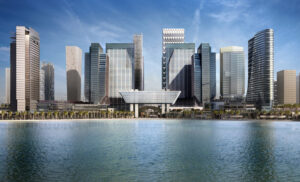
The Abu Dhabi Global Market (ADGM)—the emirate’s international financial free zone—has become a major strategic driver for real estate demand. Originally centered on Al Maryah Island, ADGM’s footprint has expanded geographically and operationally, with implications that extend directly into Reem Island and adjacent zones.
This expansion isn’t subtle. Active companies within ADGM have surged 42% in recent reporting periods, reflecting its growing status as a destination for global financial firms, asset managers, fintech operations, and AI-focused enterprises.
What This Means for Real Estate
As ADGM continues to attract international financial institutions, fintech innovators, and tech companies, the spillover into real estate is both immediate and sustained:
Commercial Demand
- Rising office space absorption near ADGM zones
- Premium commercial rents reflecting institutional tenant quality
- Development of grade-A office stock to meet demand
- Co-working and flexible office space catering to tech startups
Residential Demand
- Professionals relocating to Abu Dhabi seek housing near employment centers
- Reem Island emerges as the natural residential node for ADGM workforce
- Rental demand strengthens in premium apartment and villa segments
- Tech sector employees driving demand for modern, connected living spaces
Infrastructure Investment
- Enhanced connectivity between ADGM zones and residential districts
- Retail and F&B expansion to serve growing professional population
- Community amenities evolving to match international standards
When multinational firms, fintech platforms, and AI research centers establish regional headquarters, they bring senior executives, engineers, data scientists, legal teams, and client-facing professionals—all of whom need housing. That demand is concentrated, quality-focused, and sticky. These aren’t short-term assignments.
Key Investment Corridors: Where the Demand Is
Reem Island — Abu Dhabi’s Urban Core
Reem Island has established itself as Abu Dhabi’s most active residential market. The district consistently records the highest volume of apartment transactions across the emirate, driven by strategic location, modern infrastructure, and strong demand from both professionals and long-term tenants.
Why Reem Island Performs:
- Proximity to ADGM and Al Maryah Island employment centers
- Comprehensive community infrastructure (schools, hospitals, retail)
- Modern apartment stock with international design standards
- Strong rental demand supporting investor yields
- Lifestyle amenity balance appealing to young professionals and families
- Tech and fintech workforce concentration driving premium rental demand
Reem Island’s performance has been supported by significant price growth and rental momentum as investors and end-users recognize its alignment with employment centers. This isn’t accidental—it’s geography meeting demand.
For investors, Reem Island offers liquidity, tenant quality, and pricing that still reflects value relative to comparable urban centers globally.
Al Maryah Island — The Commercial Anchor
Al Maryah Island continues developing as Abu Dhabi’s premier commercial district, anchored by ADGM and expanding office stock. Robust office rental growth illustrates rising demand for workplace space in proximity to financial services, fintech operations, and business clusters.
This commercial expansion translates directly into residential demand nearby, especially in mixed-use developments and premium condominiums designed for urban professionals who prioritize short commutes and integrated lifestyle amenities.
Investment Angle: Properties on or near Al Maryah Island benefit from proximity to the highest concentration of professional employment in Abu Dhabi. That proximity premium is reflected in both rental rates and capital values.
Al Bahya — The Master-Planned Future
Al Bahya represents one of Abu Dhabi’s most significant residential development stories in 2026, anchored by Sobha Realty’s first master-planned community in the capital—a landmark project spanning 38 million square feet.
Why Al Bahya Matters:
Scale and Vision Sobha’s Al Bahya development isn’t incremental—it’s transformational. At 38 million square feet, this represents one of the largest branded residential communities to enter the Abu Dhabi market, designed as a complete ecosystem rather than just housing stock.
Strategic Location
- Approximately 10 minutes from Zayed International Airport
- Direct access to Yas Island’s entertainment infrastructure
- Easy highway connectivity to both Abu Dhabi city and Dubai
- Proximity to future Disney Abu Dhabi (Yas Island, expected 2032-2033)
Residential Offering The community will feature a comprehensive mix:
- Modern apartments for young professionals
- Spacious townhouses for growing families
- Premium villas for those prioritizing space
- Luxury mansions targeting high-net-worth residents
- Low-density, gated design emphasizing quality and privacy
Developer Credibility Sobha’s entry into Abu Dhabi carries significant weight. With over 30 years of experience and a reputation for construction quality and delivery discipline, Sobha represents the kind of institutional developer that elevates market standards and creates long-term value.
Investment Thesis: Al Bahya offers early-phase positioning in a master-planned community by a tier-one developer, in a location benefiting from major infrastructure investment (airport, Disney, Yas Island expansion). For investors seeking capital appreciation through community maturation and infrastructure development, Al Bahya represents exactly the kind of fundamentals-driven opportunity that outperforms over 5-10 year horizons.
The official launch is planned for early 2026, positioning the project to capture current market momentum while Abu Dhabi’s residential demand continues its upward trajectory.
Saadiyat Island — The Premium Play
Saadiyat continues to command price premiums due to its cultural assets, luxury villa offerings, and lifestyle environment. Annual price growth in certain Saadiyat segments has been among the highest in the market, ranging from 10-17% depending on property type.
Who’s Buying: High-net-worth individuals, senior executives, and families prioritizing space, privacy, and cultural amenity. Saadiyat appeals to a different buyer profile than Reem Island, but the demand is equally strong.
Yas Island — Lifestyle and Tourism Synergy
Price growth and rental gains on Yas Island remain elevated, supported by leisure, entertainment, and tourism-linked demand. The island’s positioning as a family-friendly destination with world-class amenities creates consistent end-user and investor interest.
The Disney Factor: With Disney Abu Dhabi planned for Yas Island (expected 2032-2033), the long-term demand outlook strengthens further. Infrastructure investment and tourism infrastructure will reshape the area years before opening—exactly why Al Bahya’s proximity to this development creates additional value layers for investors.
Price Trends and Yield Expectations
Capital Appreciation
As of early 2026, prominent districts such as Yas Island, Reem Island, and Saadiyat Island are leading price appreciation, with annual growth rates ranging from 10% to 17% across different segments.
This growth is supported by genuine demand—not speculative buying. Occupancy rates remain strong, rental collections are stable, and transaction volumes indicate real end-user activity rather than flipping behavior.
Rental Yield Outlook
Rental yields in Abu Dhabi remain attractive compared to many global cities. Well-located apartments and high-demand residential segments are delivering 6-9% rental returns, depending on district and property type.
For investors accustomed to 2-4% yields in London, New York, or Singapore, Abu Dhabi’s rental performance represents compelling value—particularly when coupled with capital appreciation and tax-free income.
Yield Strategy:
- Reem Island apartments: 6-8% gross yields
- Yas Island villas: 7-9% gross yields
- Saadiyat premium villas: 5-7% gross yields with stronger capital appreciation
- Al Reem townhouses: 6-8% gross yields
- Al Bahya (projected): 6-8% gross yields with early-phase capital appreciation potential
These aren’t theoretical—they reflect actual market performance in established communities with proven tenant demand.

Regulatory Stability: The Underrated Advantage
Abu Dhabi’s property market benefits from a transparent and regulated environment that enhances investor security—a factor often underappreciated until you’ve experienced less disciplined markets.
Key Protections:
- Escrow account requirements protecting buyer deposits
- Digital land registration providing clear title
- Freehold ownership regulations offering full property rights
- Property-linked residency visas strengthening long-term investment incentives
- Transparent developer licensing and project approval processes
For international investors, these regulatory fundamentals reduce risk and improve capital security. You’re not navigating grey areas or relying on informal arrangements—the system is clear, documented, and enforceable.
This regulatory clarity is one reason institutional capital is comfortable deploying at scale in Abu Dhabi. The infrastructure for professional real estate investment exists and functions reliably.
What This Means for Investors in 2026
Abu Dhabi’s real estate market in 2026 is characterized by measured, demand-driven price growth balanced with strong transactional activity. The expansion of ADGM as a financial and tech hub, the sustained appeal of strategic residential districts like Reem Island, Sobha’s transformational Al Bahya development, and ongoing capital inflows are shaping a market trajectory that favors long-term positioning.
For investors focused on capital appreciation: Select districts are delivering double-digit annual growth supported by genuine demand fundamentals rather than speculation. Al Bahya offers early-phase positioning in what will become one of Abu Dhabi’s largest residential communities.
For investors focused on rental income: Yields remain attractive relative to global cities, with stable tenant demand—particularly from the growing fintech and tech sectors—and improving rental collection frameworks.
For investors focused on strategic positioning: The concentration of employment hubs (ADGM, Hub71), infrastructure investments (Zayed Airport, Disney Abu Dhabi), and long-term economic planning (AI and fintech initiatives) collectively support continued real estate growth and diversification across asset classes.
The Risk Consideration: No market grows indefinitely without corrections. Abu Dhabi’s strength lies in demand that’s increasingly end-user driven rather than speculative. When professionals relocate for employment, when families settle near schools and hospitals, when businesses establish headquarters, when tech companies build research centers—that demand is sticky. It doesn’t evaporate when sentiment shifts.
Final Perspective
Abu Dhabi’s real estate market in 2026 is defined by strategic growth, institutional participation, and evolving urban dynamics. As the emirate gains traction as a hub for global capital, world-class financial services, fintech innovation, and AI development through ADGM and Hub71, the real estate sector continues to benefit from rising demand across residential and commercial segments.
Reem Island’s emergence as a prime investment corridor, Al Bahya’s transformational scale under Sobha’s development, coupled with sustainable demand fundamentals and regulatory clarity, positions Abu Dhabi as an attractive core market in the Gulf region’s investment landscape.
For investors who understand market cycles, this moment matters. Abu Dhabi is no longer “next”—it’s now. The institutional capital has arrived, the tech sector is expanding, the infrastructure is maturing, and the demand drivers are structural rather than cyclical.
The opportunity isn’t about timing a speculative peak. It’s about positioning early in a market that’s fundamentally repricing itself based on actual value, not aspiration.
That’s where lasting returns are built.
At Aramas Property Investments, we track institutional capital flows, employment corridor development, tech sector expansion, and infrastructure investment as leading indicators of where sustainable value emerges. Abu Dhabi’s 2026 market reflects exactly the kind of fundamentals-driven opportunity we look for: genuine demand, disciplined supply, regulatory clarity, and long-term economic planning. If you’re evaluating Abu Dhabi property, let’s discuss which districts, property types, and investment strategies align with where the market is actually moving—not where the headlines suggest.